From Venice to Výstaviště
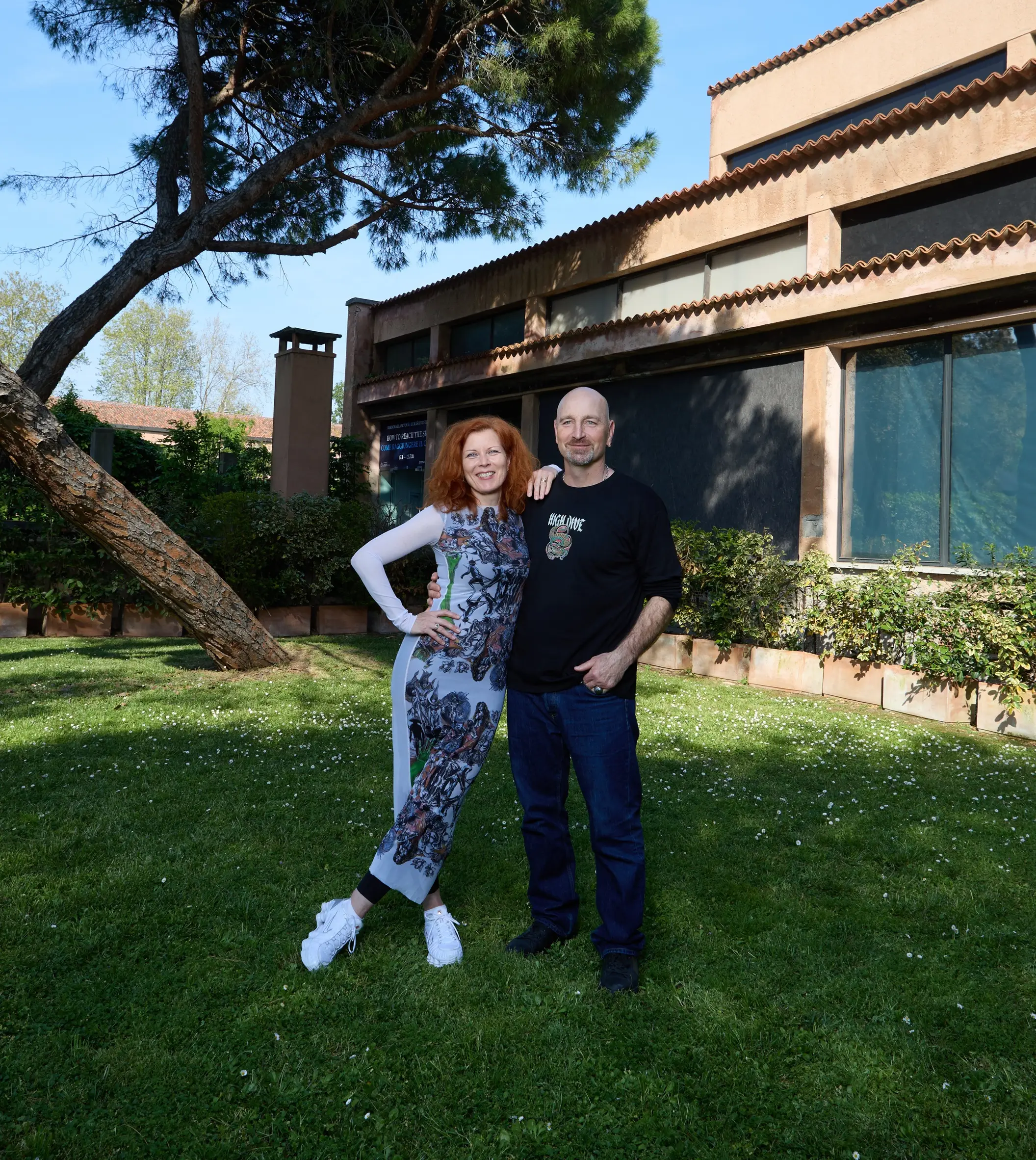
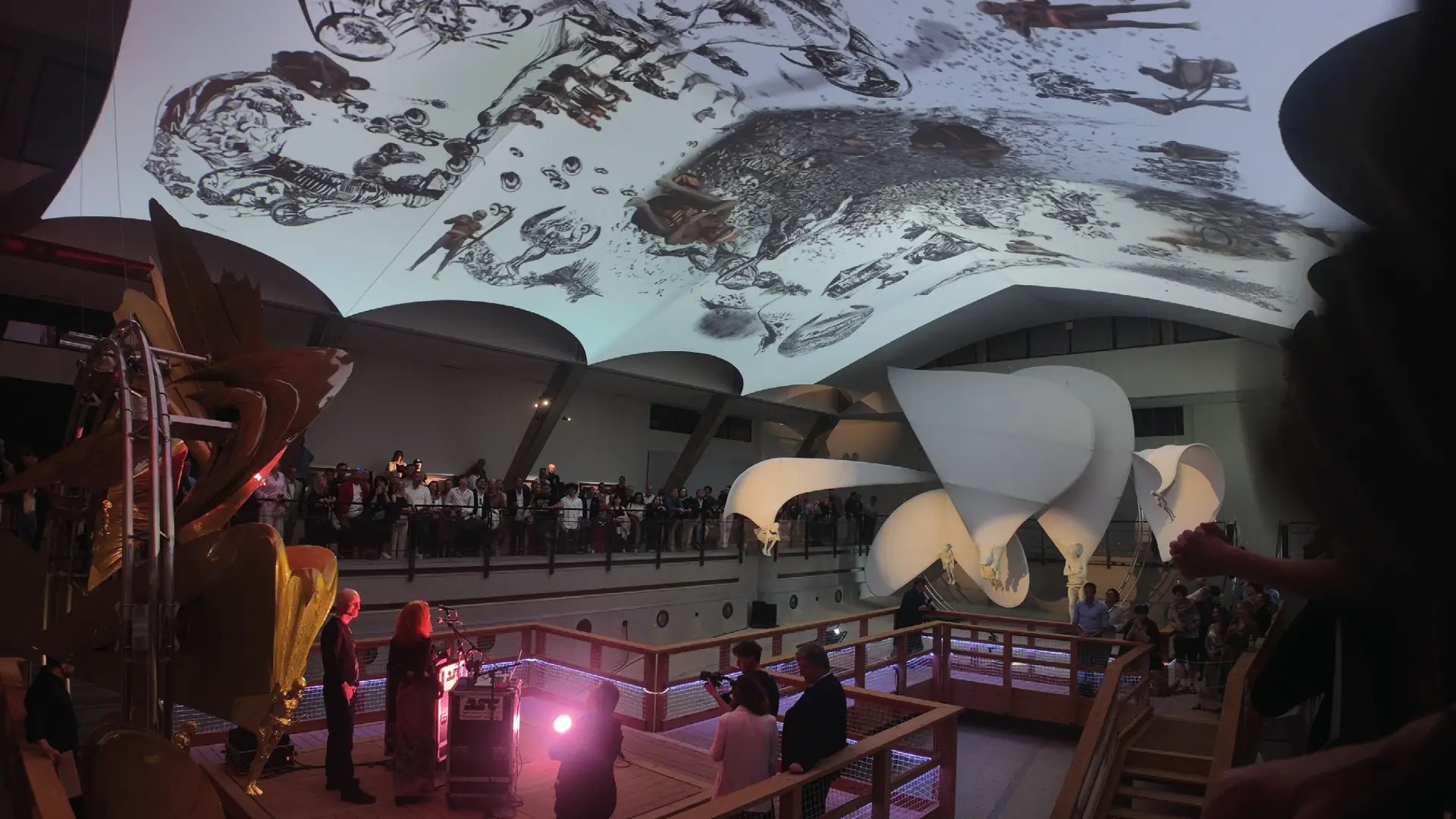
At this year’s Biennale Arte in Venice, in the prestigious Fondazione Giorgio Cini museum, Barbora Šlapetová and Lukáš Rittstein presented a monumental, miraculous Temple, part of a multimedia project titled How to Touch the Sky.
Very soon, we will connect this extraordinary art with the breathtaking architecture of the restored Industrial Palace, giving you the opportunity to visit the Temple yourself. On the open space of the piazza, the Runway to the Temple will lead you directly to its gates.
When and where
October 5 – October 19 2026
The piazza of the Industrial Palace
Free Admission
Information available in Czech and EnglishOfficial Public Opening
October 5, 2026, 6 p.m.
(on the day of Václav Havel’s unlived 90th birthday)Petr Nikl (performance) + Ivan Acher (music)
Accompanying Programme
Guided Tours with the Artists
Explore Runway to the Temple and visit The Temple in the company of authors Lukáš Rittstein and Barbora Šlapetová. Free entrance.
October 13, 2026, 5:00 pm
October 16, 2026, 5:00 pm
October 16, 2026, 6:30 pm, VIP tickets available on DonioBook Launch
Book Launch and Exhibiton Closing
October 18, 2026, 5:00 PM
Accompanying the exhibition is a pictorial publication titled How to Touch the Sky, which maps the thirty-year artistic and personal journey of Barbora Šlapetová and Lukáš Rittstein. It contains reproductions of their works as well as photographs from both exhibitions (the Venice Biennale and Výstaviště Praha), connecting the individual elements of the project with their long-term body of work.
Dialogue of Two Cultures
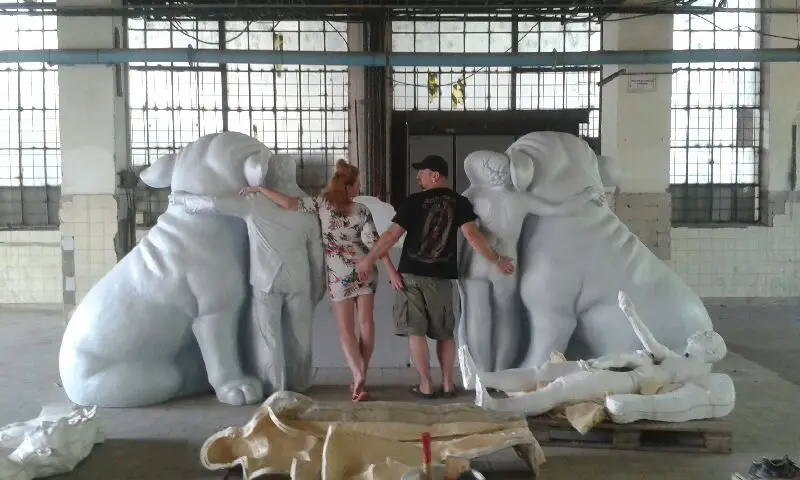
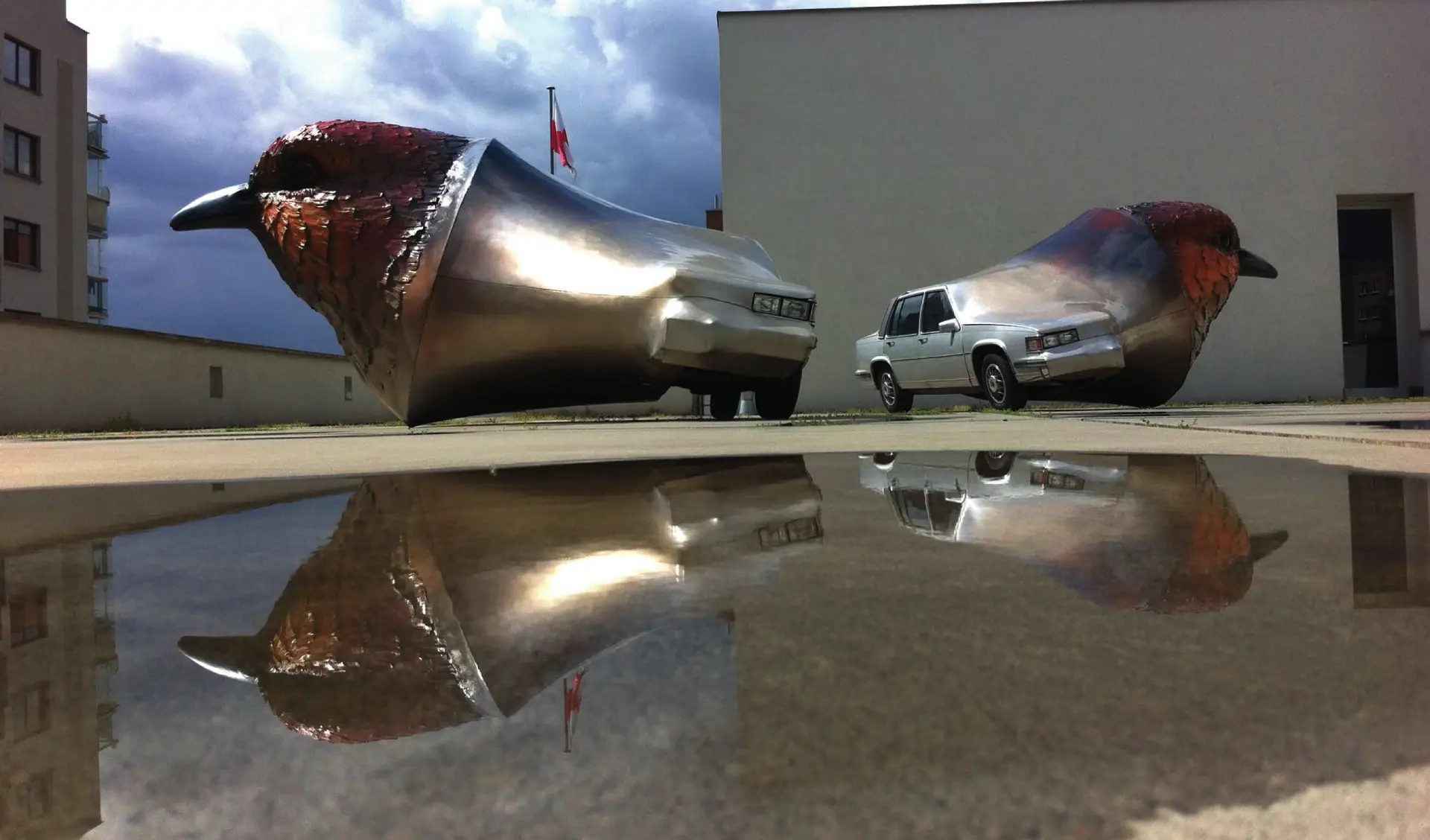
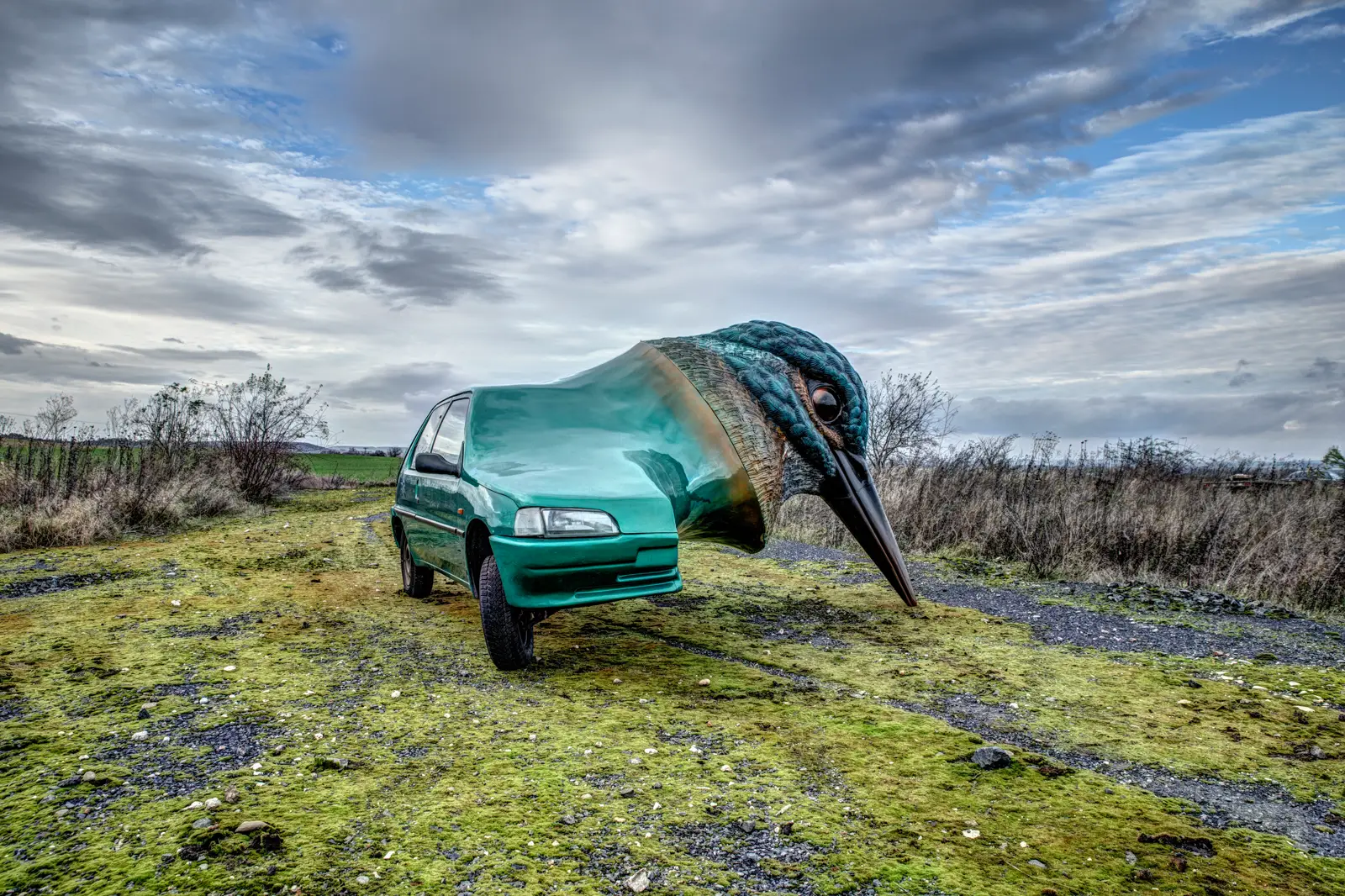
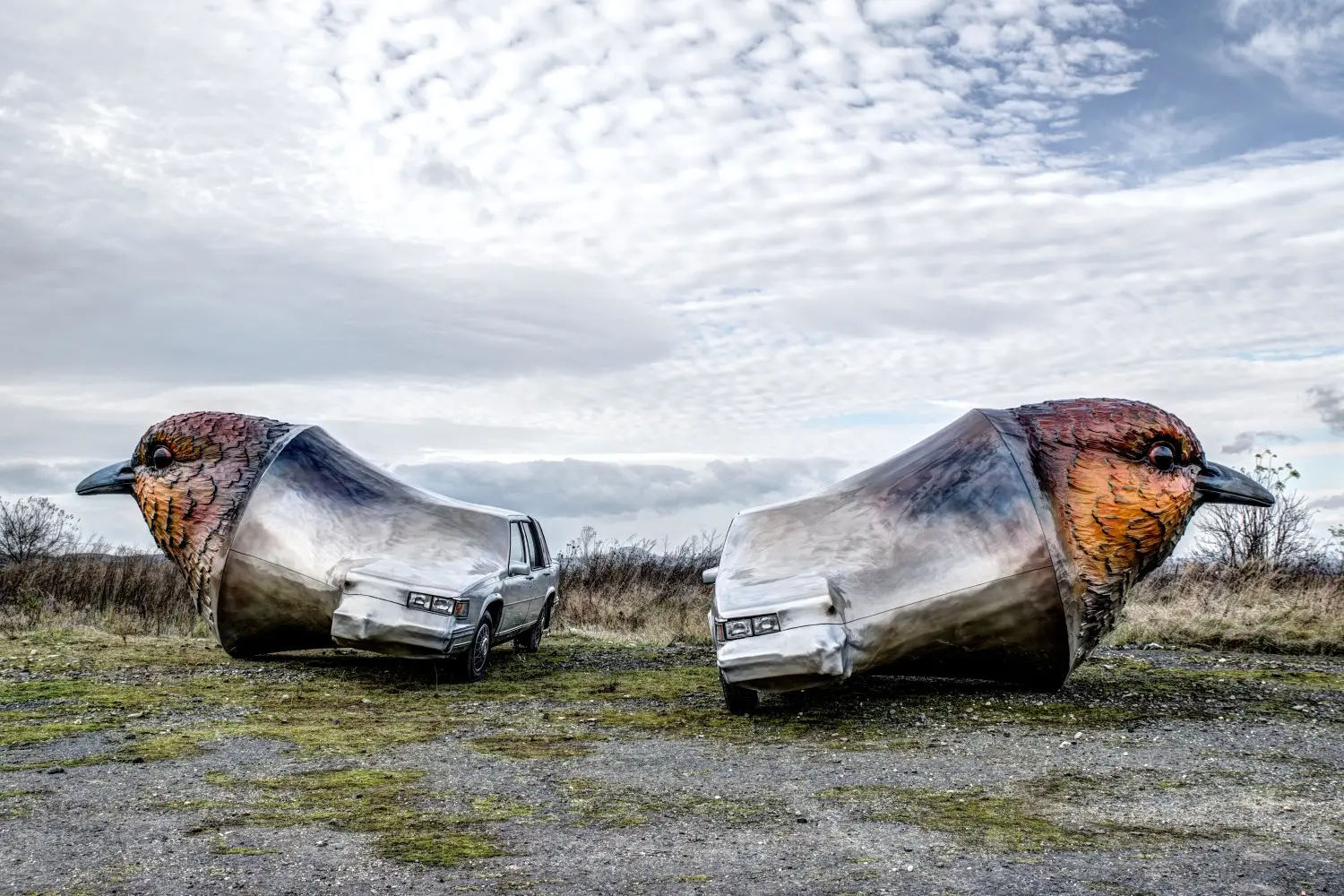
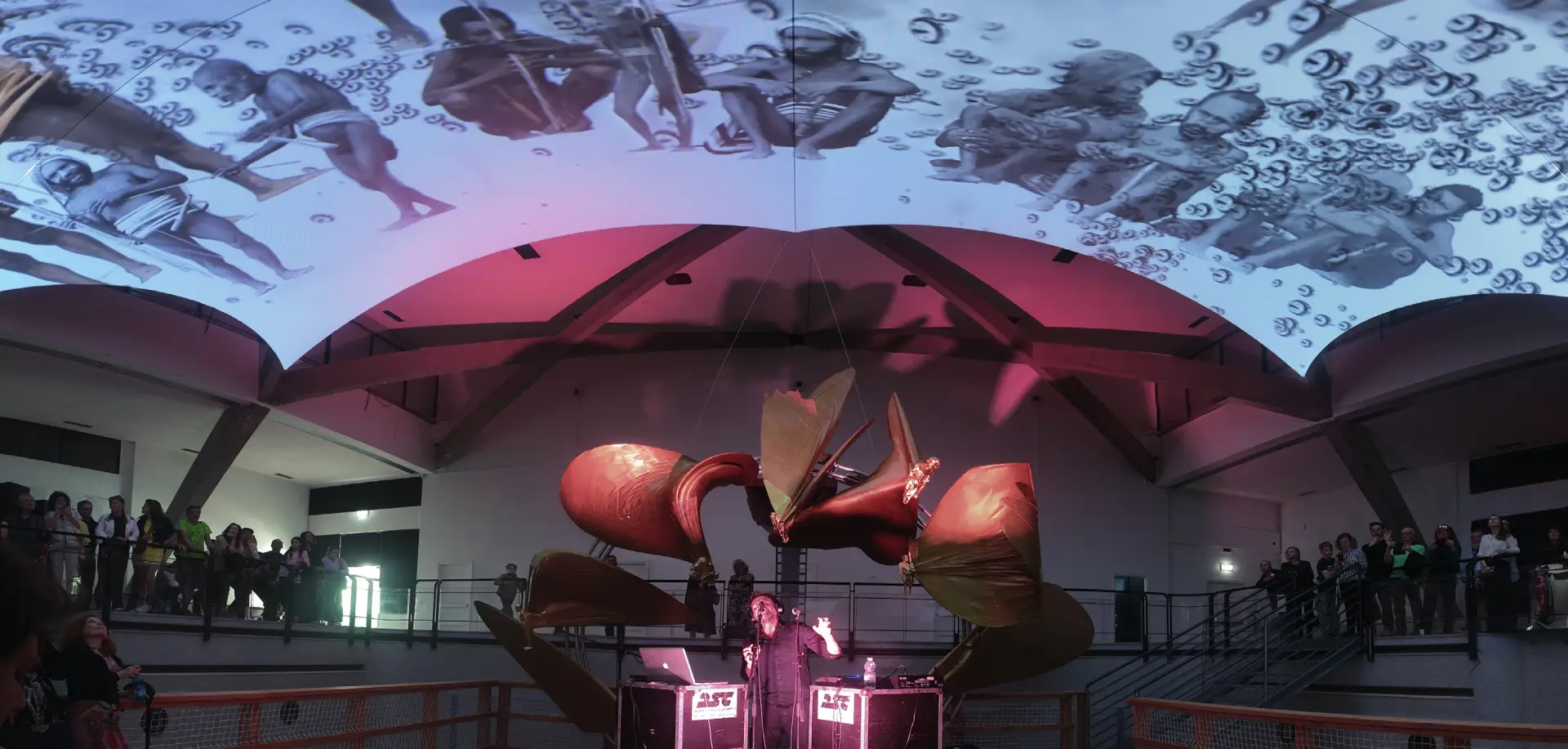
The 120-meter-long, axially symmetrical sculptural ensemble Runway (by Lukáš Rittstein) flanks the approach to the Turbo-Temple like a line of sphinxes – a cinematic sanctuary landing in front of the Industrial Palace at Výstaviště to honor the unlived 90th birthday of our chief, Václav Havel (October 5, 2026).
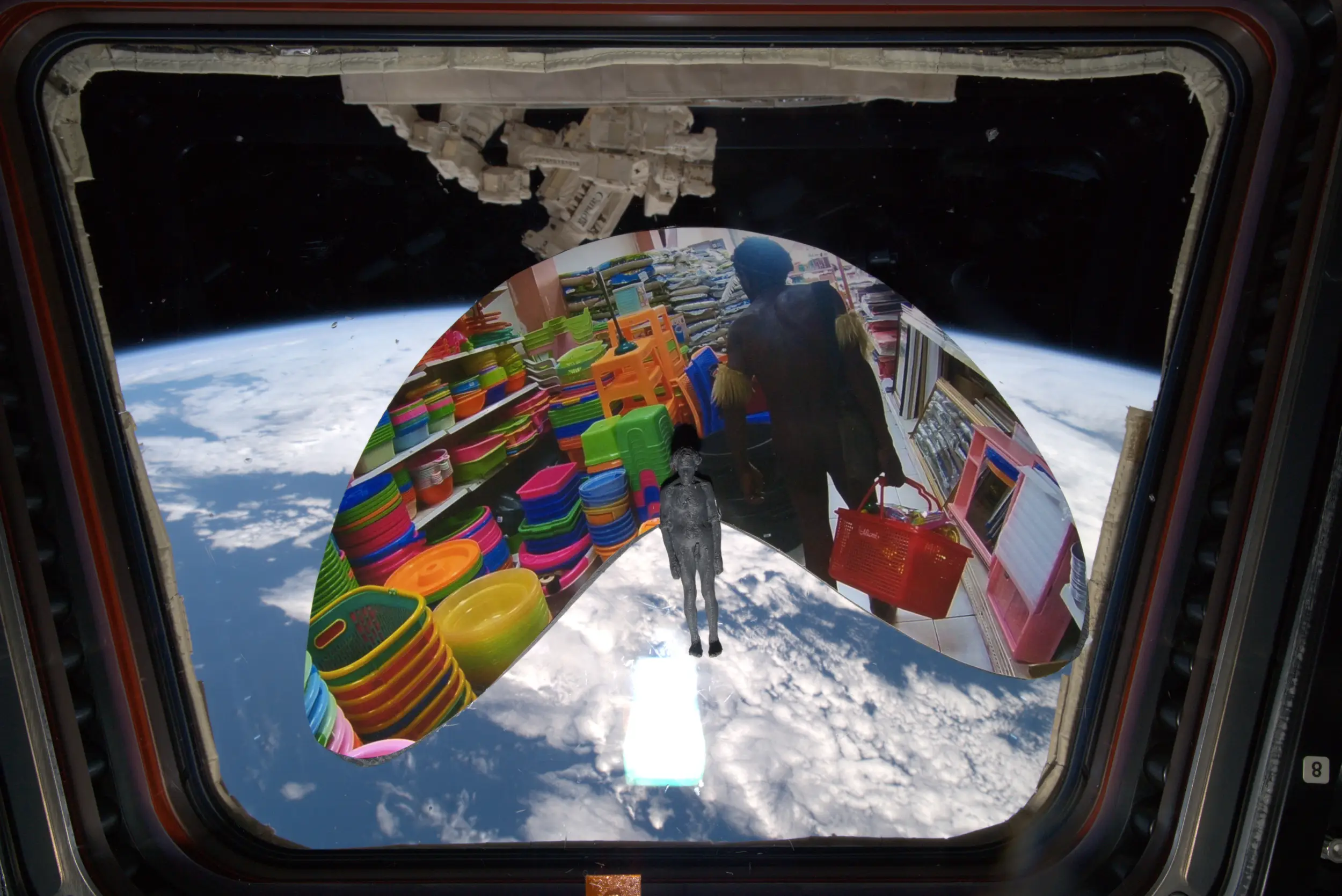
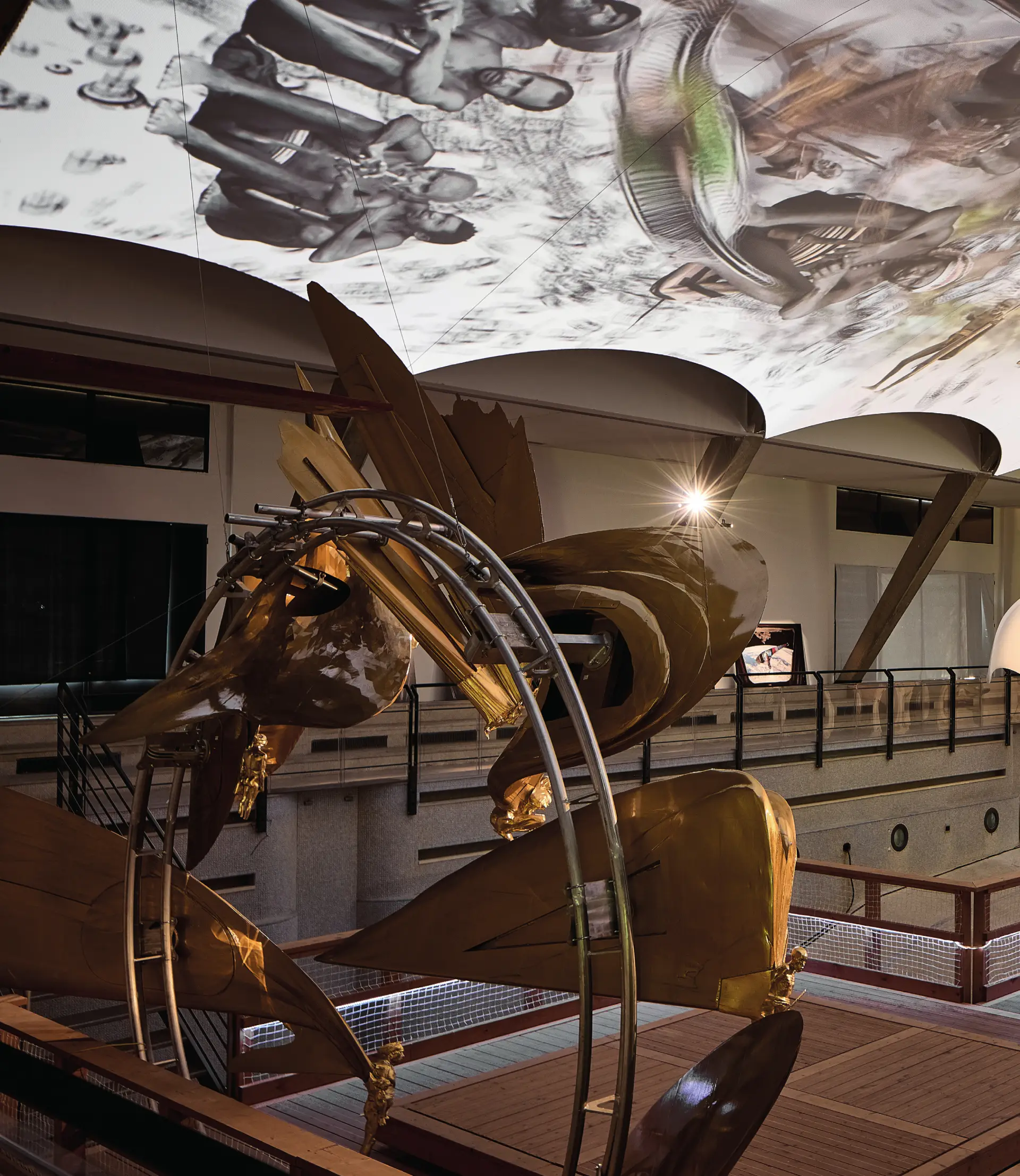
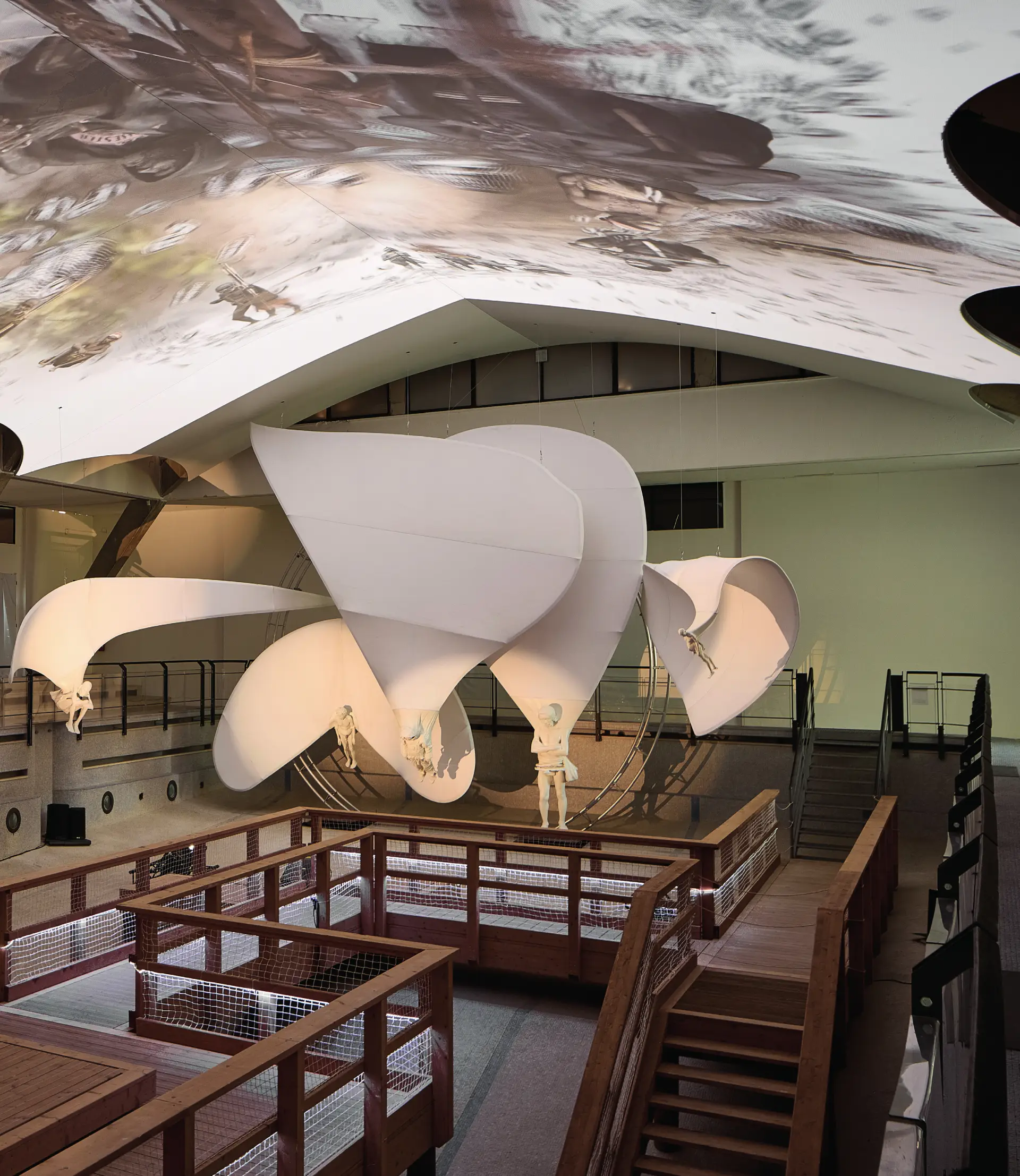
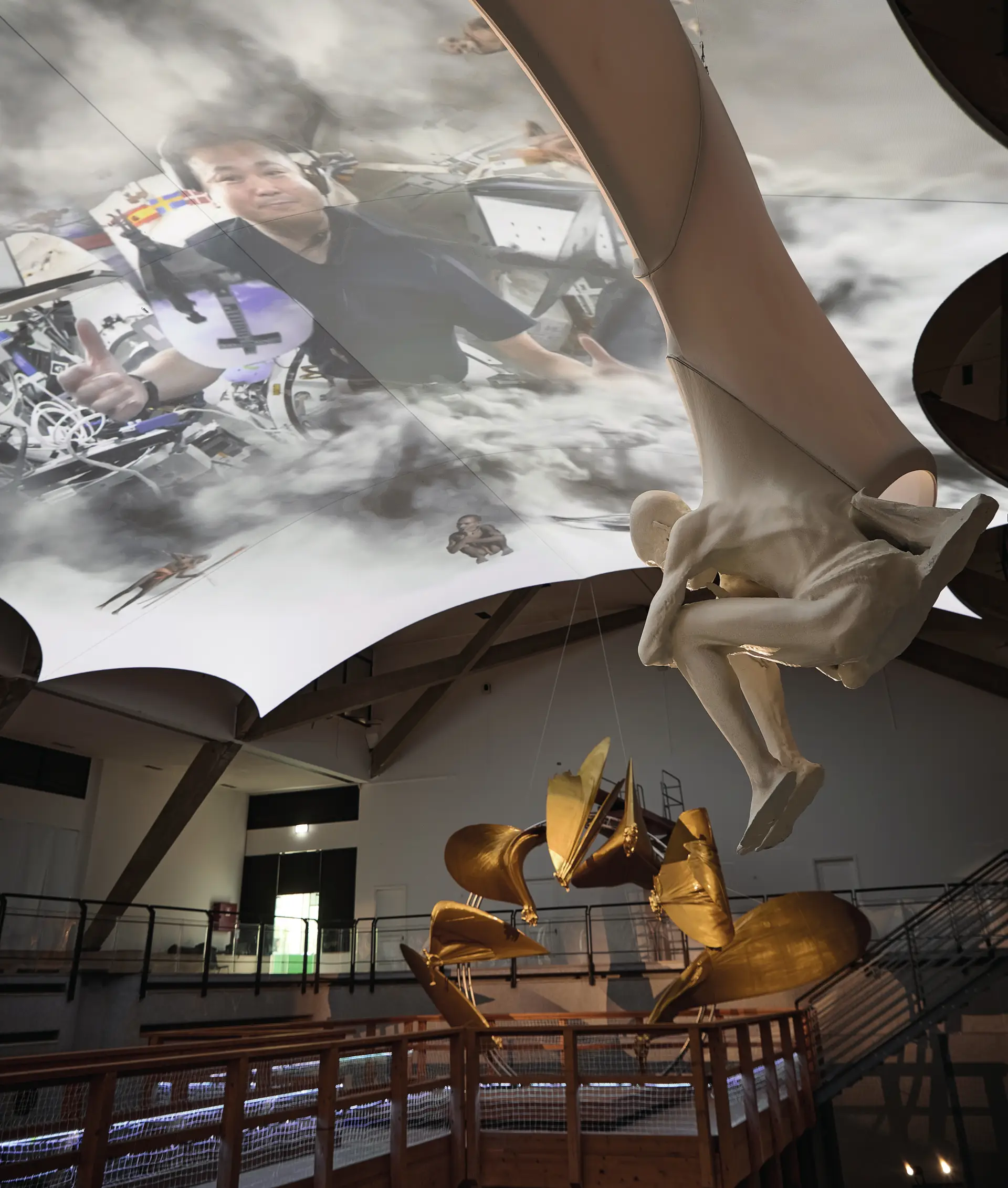
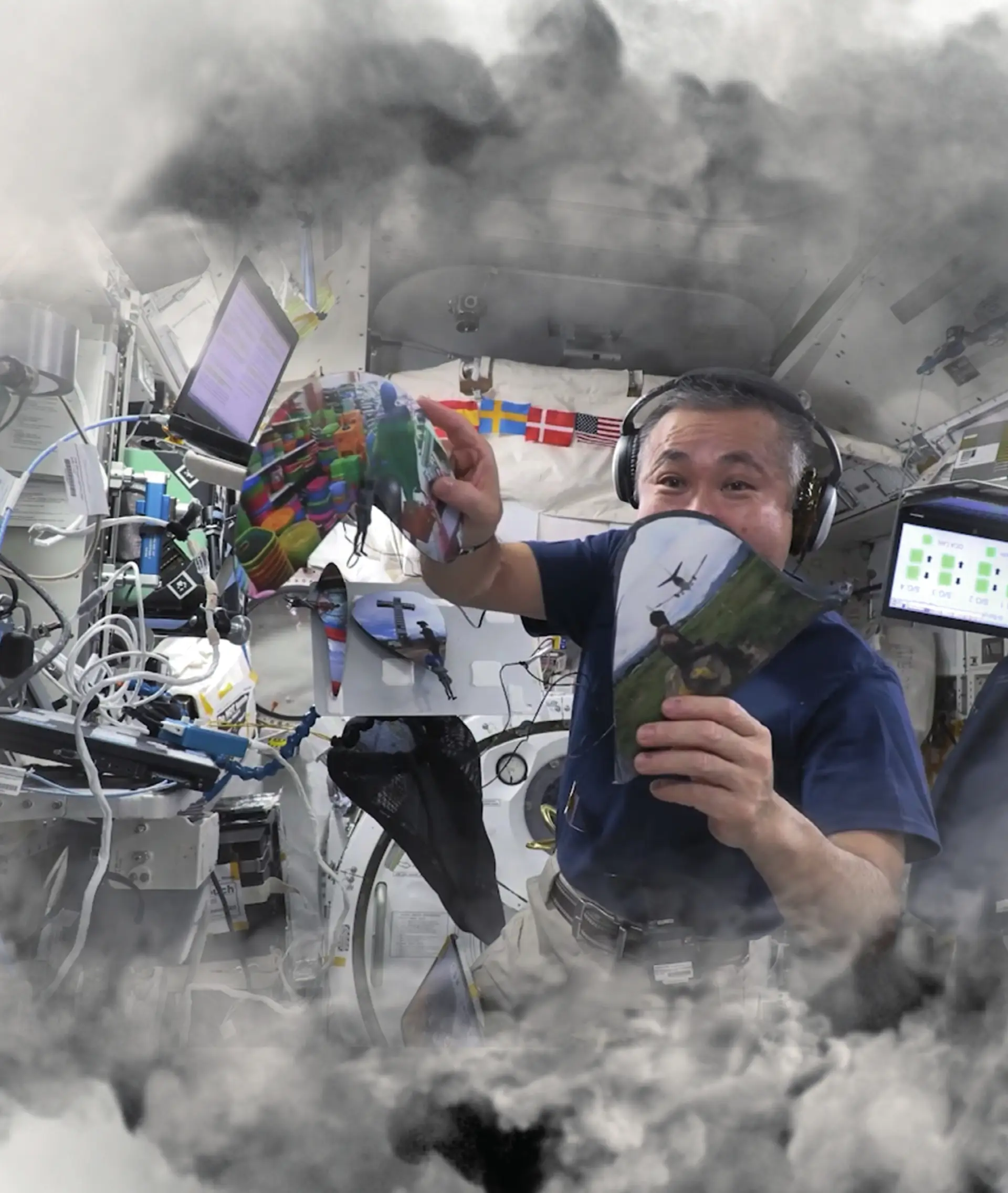
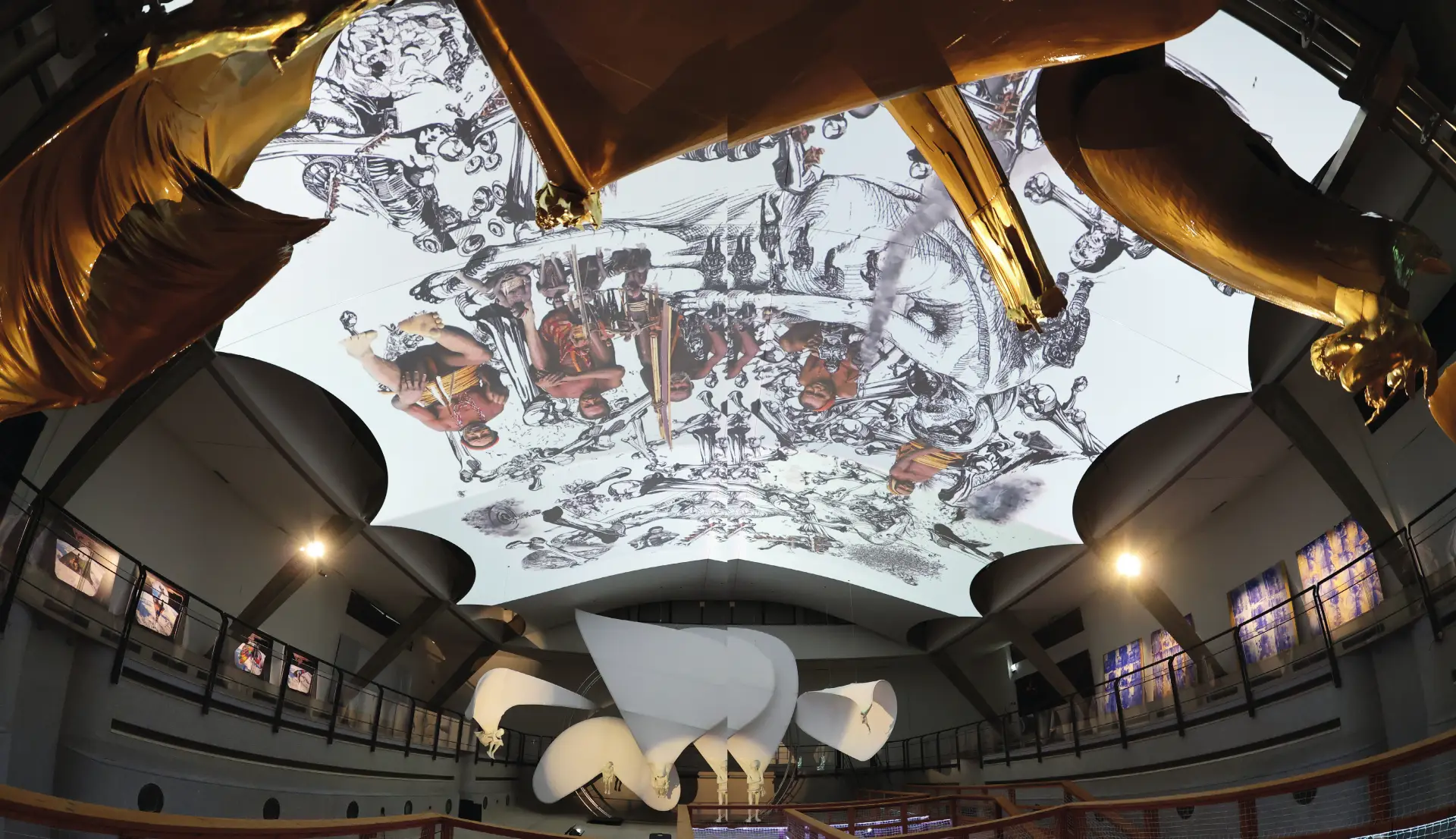
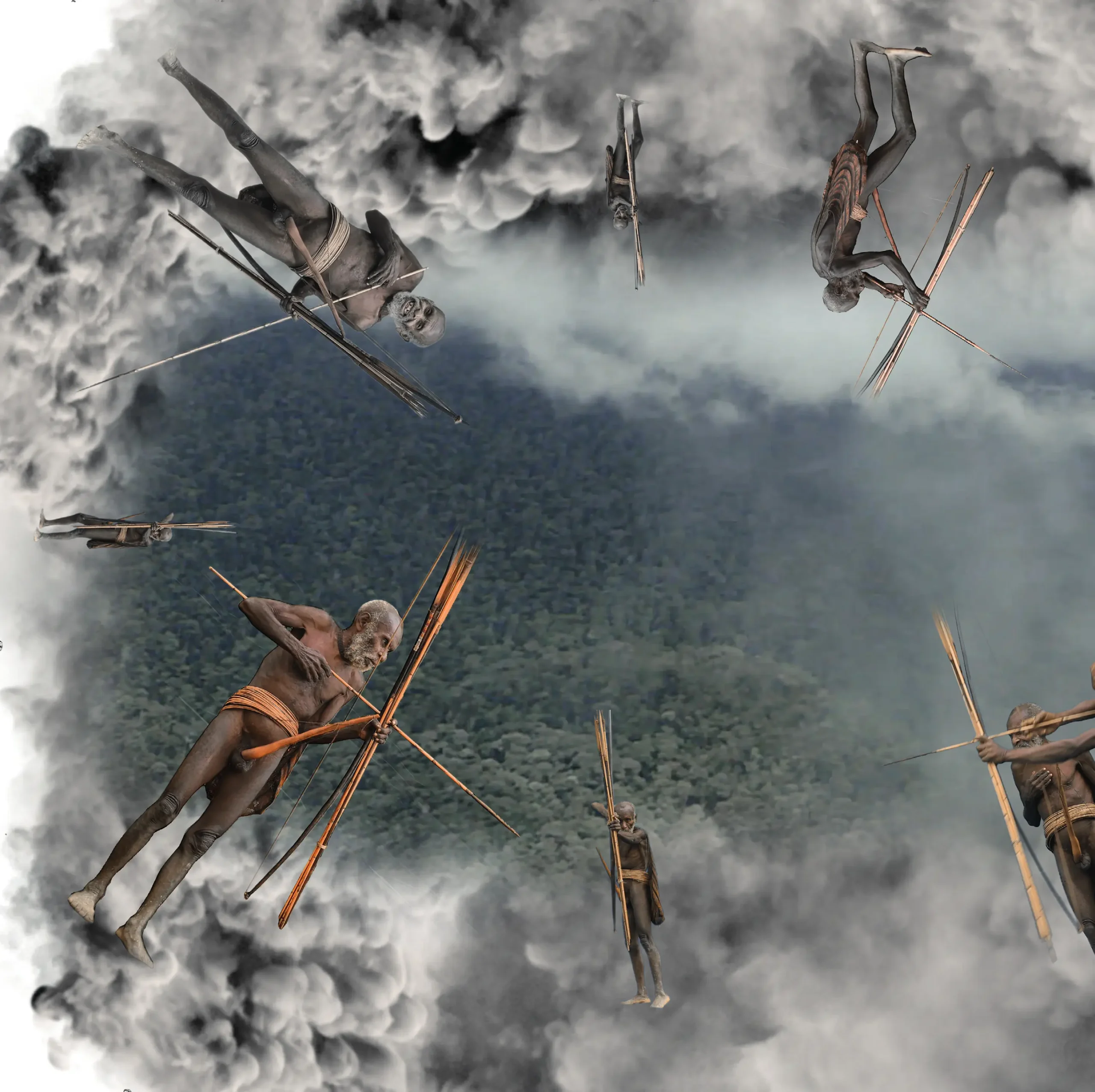
The interior of the Temple is painted with a cinematic epic (by Barbora Šlapetová) celebrating the encounter of worlds and time travel. The animated Heavens depict the inner world of the last natural people of West Papua, while pulsating video footage captures actual events that unfolded in the jungle and in outer space.
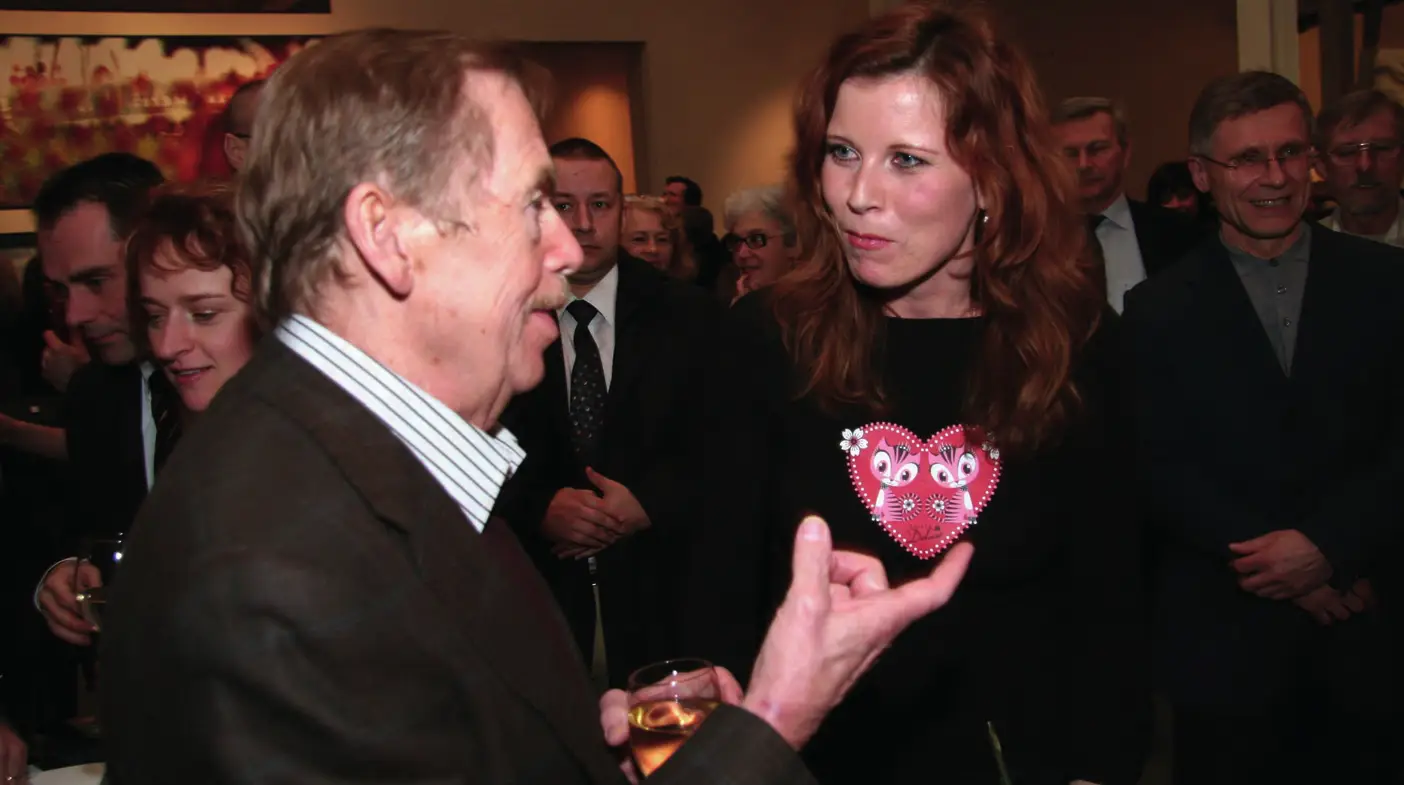
In a symbolic thirty-year dialogue of cultures, Barbora and Lukáš fulfilled the Papuans’ desires, the most important of which was to meet our chiefs. At that time, this meant the greatest among them, Václav Havel, as well as Koichi Wakata – an astronaut who, like them, touched the Sky. For this reason, the cinematic Heavens inside the Temple feature two space phone calls from 2013 and 2022, in which Koichi calls from the International Space Station to Papuan chiefs who possess the ability to fly into the Sky through smoke.
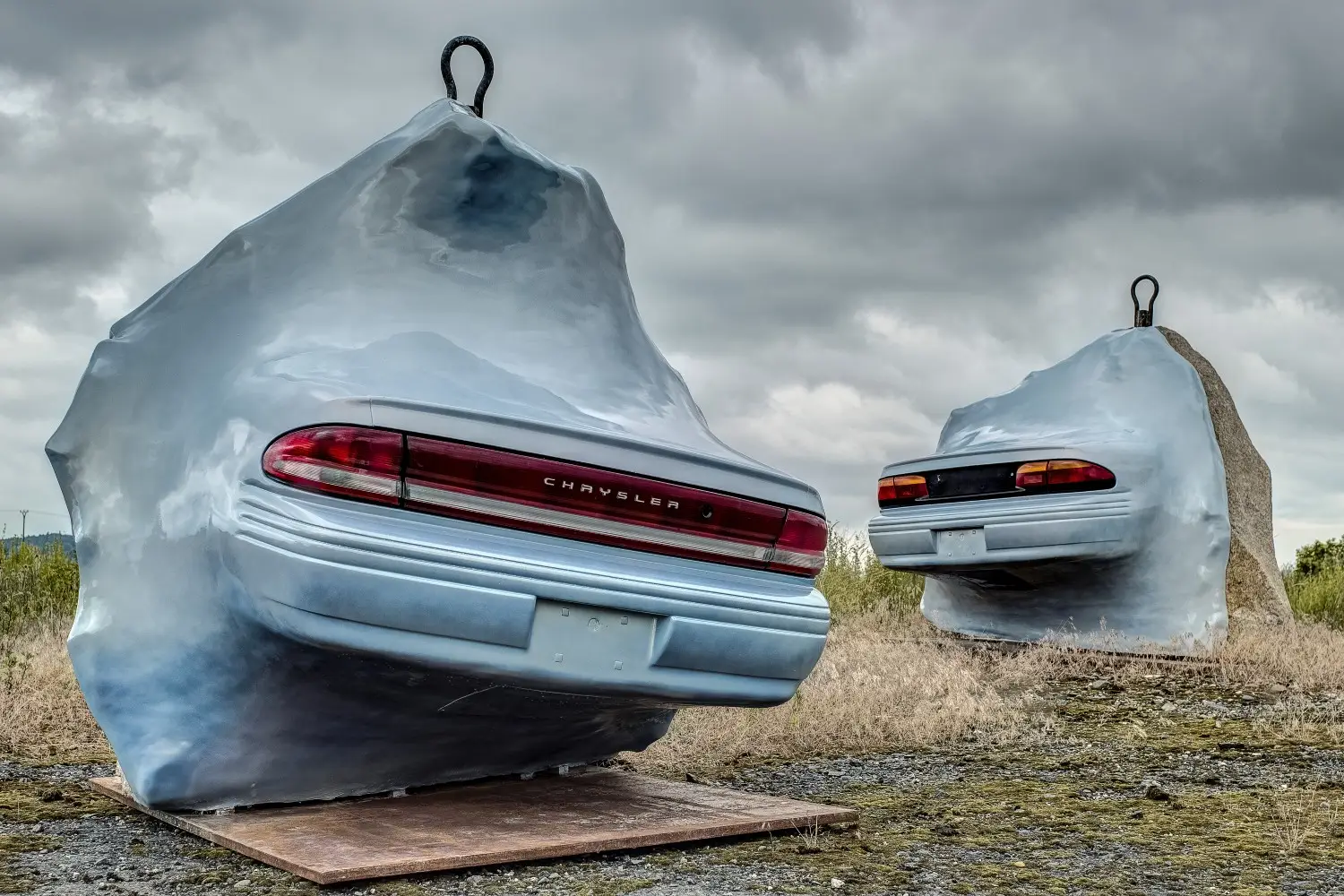
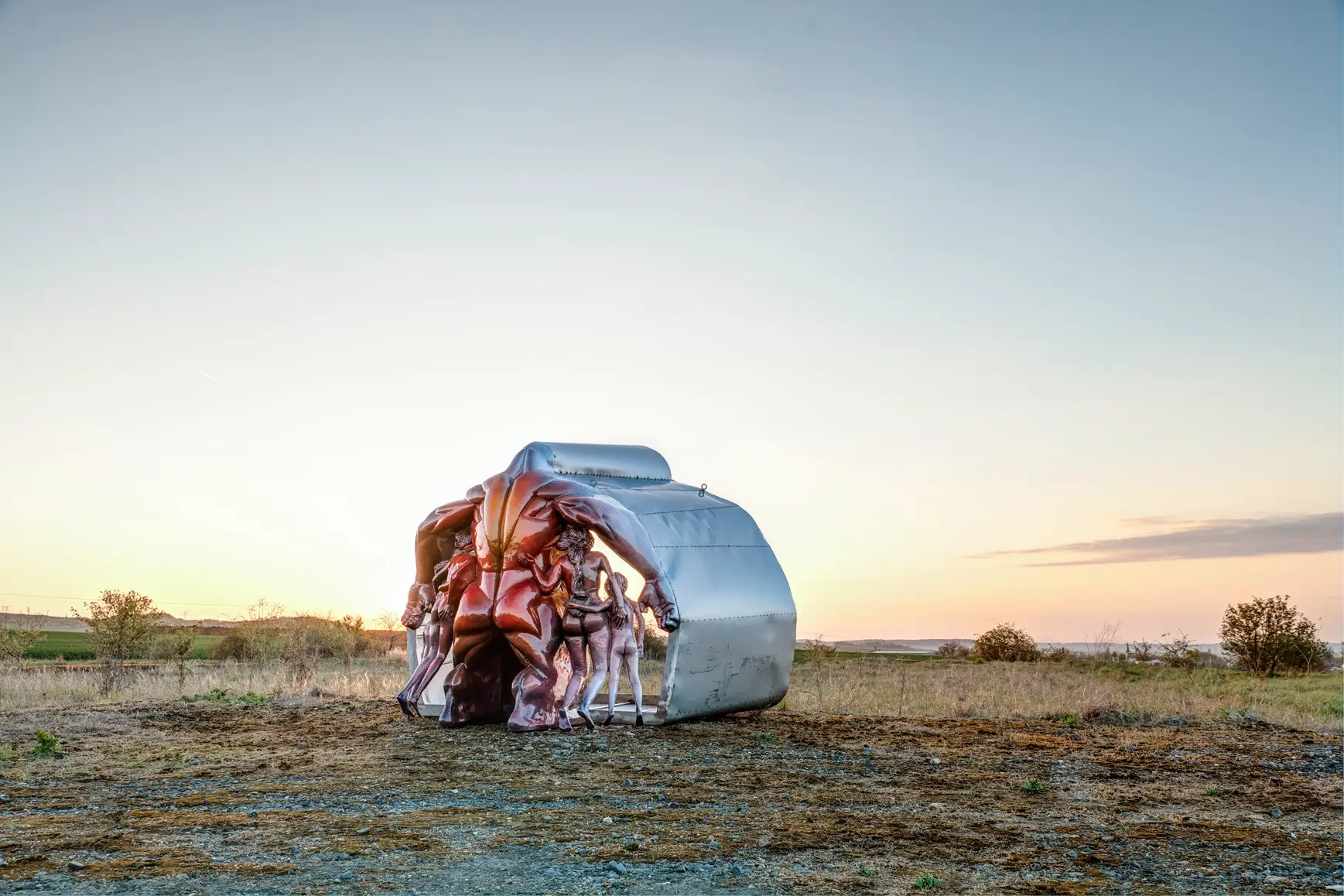
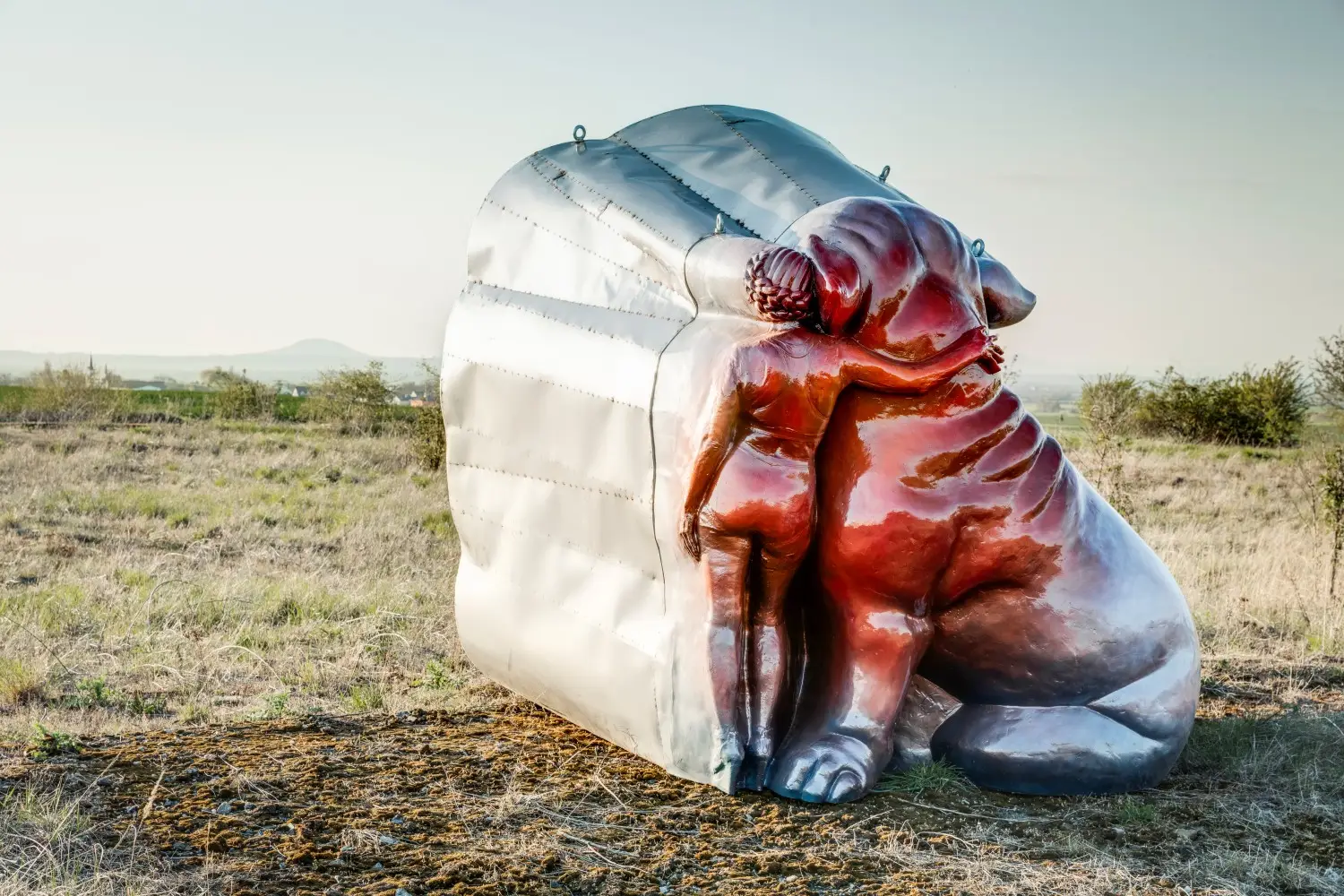
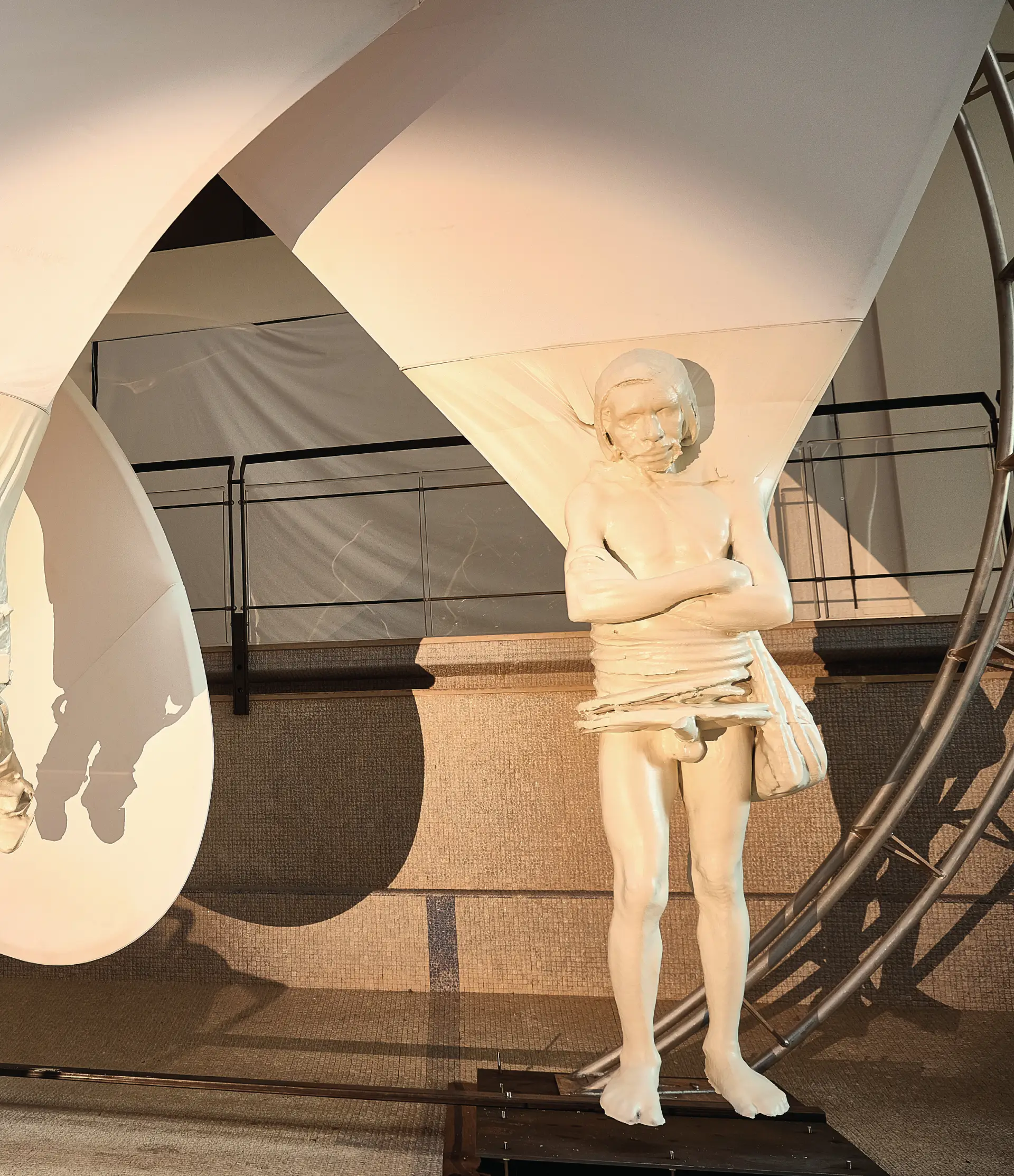
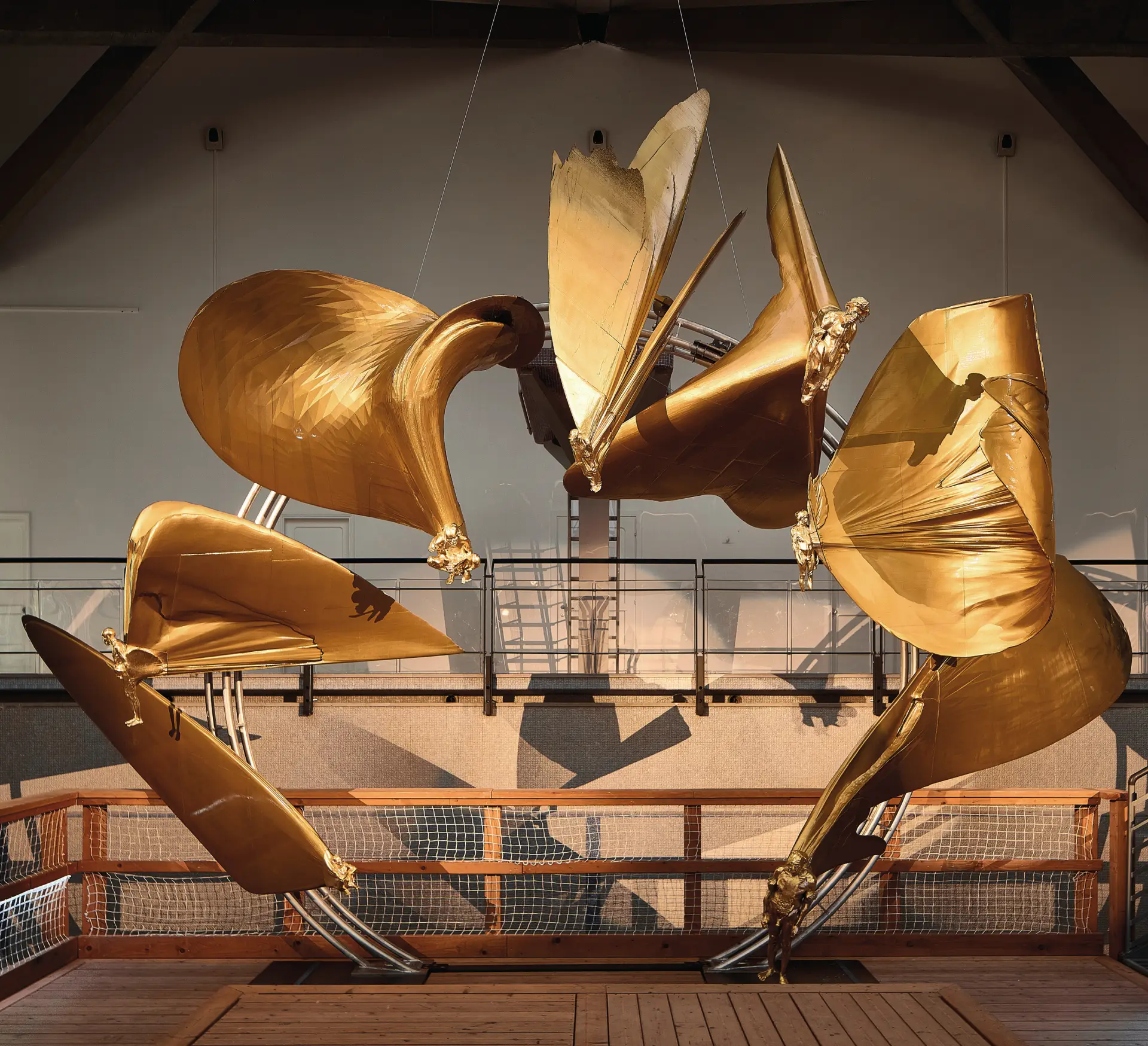
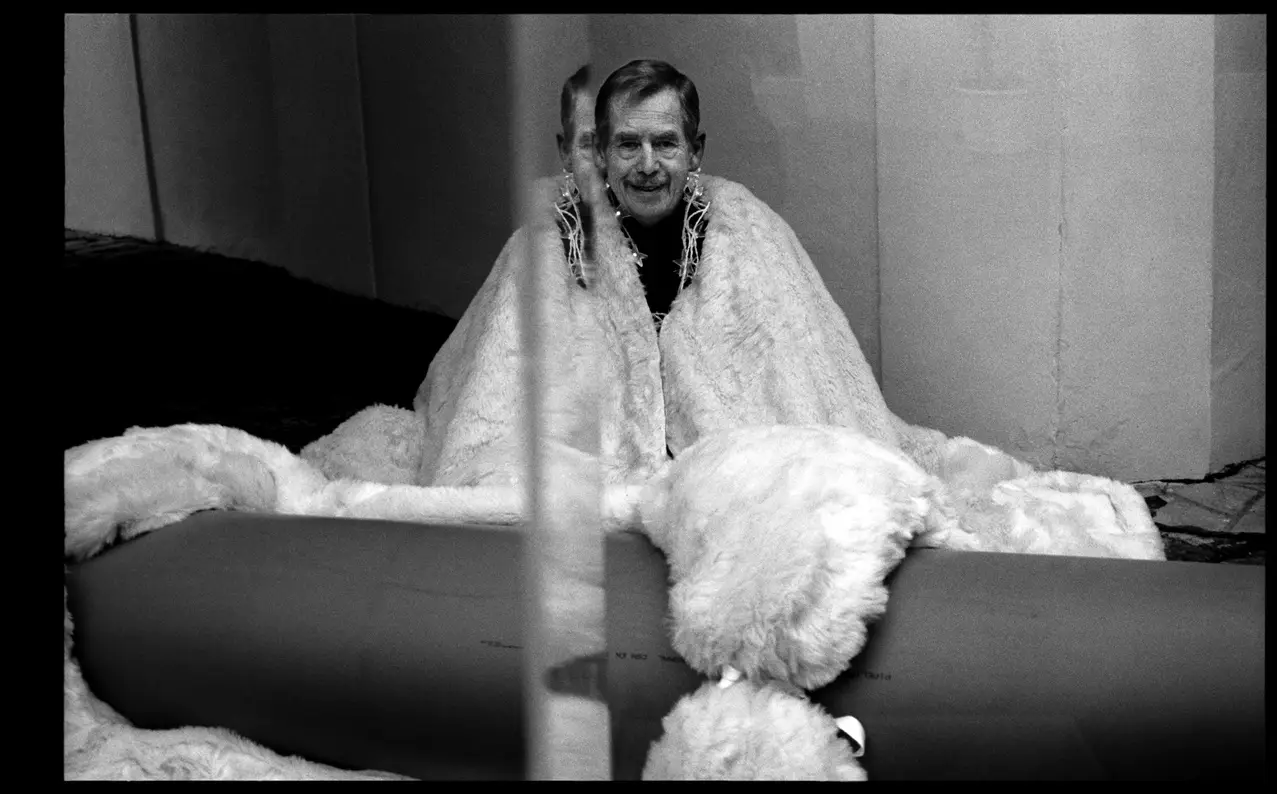
The symbolic altar of the Temple consists of the sculptural group Pilots (Lukáš’s Spirit Tree), in which four stone-age astronauts descend to Earth in flight formation alongside a NASA astronaut. Projected onto their monumental wings is a unique cinematic poem (by Barbora) about the merging of cultures titled Transfer (2006–2008), centered around Václav Havel as its main protagonist.
The Story of the Temple
This magnificent masterpiece represents a life story where art and existence merge into one. Thirty years ago, curiosity and a desire to travel across cultures beyond the boundaries of the known world led Barbora and Lukáš to New Guinea. They were searching for untouched wilderness and people not yet impacted by Western civilization. What they found and experienced there far exceeded their expectations. Not only through the sheer difference of the world they encountered, but above all through the deep relationships they built with the local people.
From that point on, the story evolved alongside them. First came cultural shock and fascination, followed by the gradual understanding of a different culture, and ultimately the realization that through it, you actually learn about yourself and the world you come from. Individual expeditions and encounters with native tribes gradually became chapters not only of their personal lives, but also of Barbora and Lukáš’s artistic work. From a certain moment onward, art and life could no longer be separated.
The exhibition in front of the Industrial Palace is an attempt to weave this entire profound human story into a single organism, allowing visitors to truly walk through it. The goal is not merely to display photographs, sculptures, or films on gallery walls. The goal is to bring visitors inside the artists’ own experience for a moment: from initial fascination and the encounter with a completely different world, through dreams, emotions, and imagination, to the questions about our own civilization that the artists themselves have been asking after thirty years.
This is precisely why the dome and animated sky were created. It is an image that one can physically step into. What could be captured on camera or film stems from real encounters and situations experienced by Barbora and Lukáš. What could not be recorded – dreams, memories, inner visions, and emotions – has been drawn and set into motion. It is meant to surround you as if a piece of the sky had momentarily fallen upon you.
“And that is exactly what we would like to guide the visitor through: to let them experience that world first and be fascinated by it just as we once were. And only then let them look back from this new perspective at the world in which they themselves live,” say the authors.
About the Authors
Both artists are graduates of the Academy of Fine Arts in Prague.
Barbora Šlapetová is a painter, photographer, and experimental filmmaker who has been collaborating with NASA on her artistic projects since 2009. She received the DAAD scholarship in Berlin in 2000 and won the award for Best Film at the Kyoto Biennale in 2019.
Lukáš Rittstein headed the Sculpture Studio at the Academy of Fine Arts in Prague for a decade (2013–2023) and is a recipient of the 1999 Jindřich Chalupecký Award for the best young Czech artist.
Both have represented the Czech Republic at EXPO Shanghai 2010 and EXPO Milan 2015, among other international platforms. They are also both recipients of the Magnesia Litera Award for their book Why Is the Night Black (Proč je noc černá, Kant 2005) and are core artists at the DOX Centre for Contemporary Art.
You can learn more about their story in the upcoming film Nepřistupuj blíž (Don’t Come Any Closer).